AI in Polish companies: official data shows it doubled. Where to start?
A year ago AI in business was a rarity in Poland. Now you only have to open the news to hear that "everyone is already adopting it". I checked what the latest data from Statistics Poland (GUS) and Eurostat says, and why many companies still don't know where to start. At the end there's a simple list of steps I use with clients.
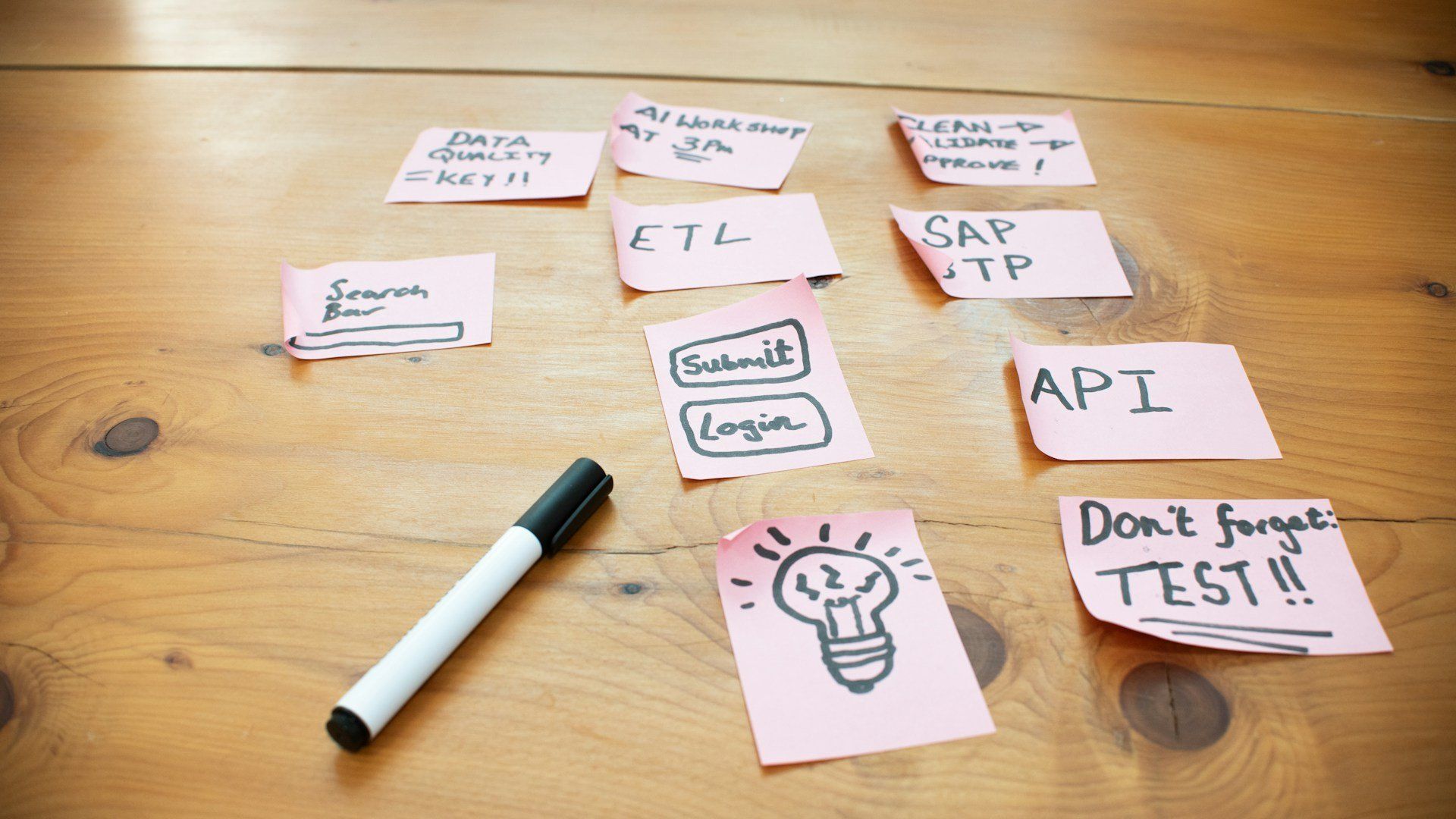
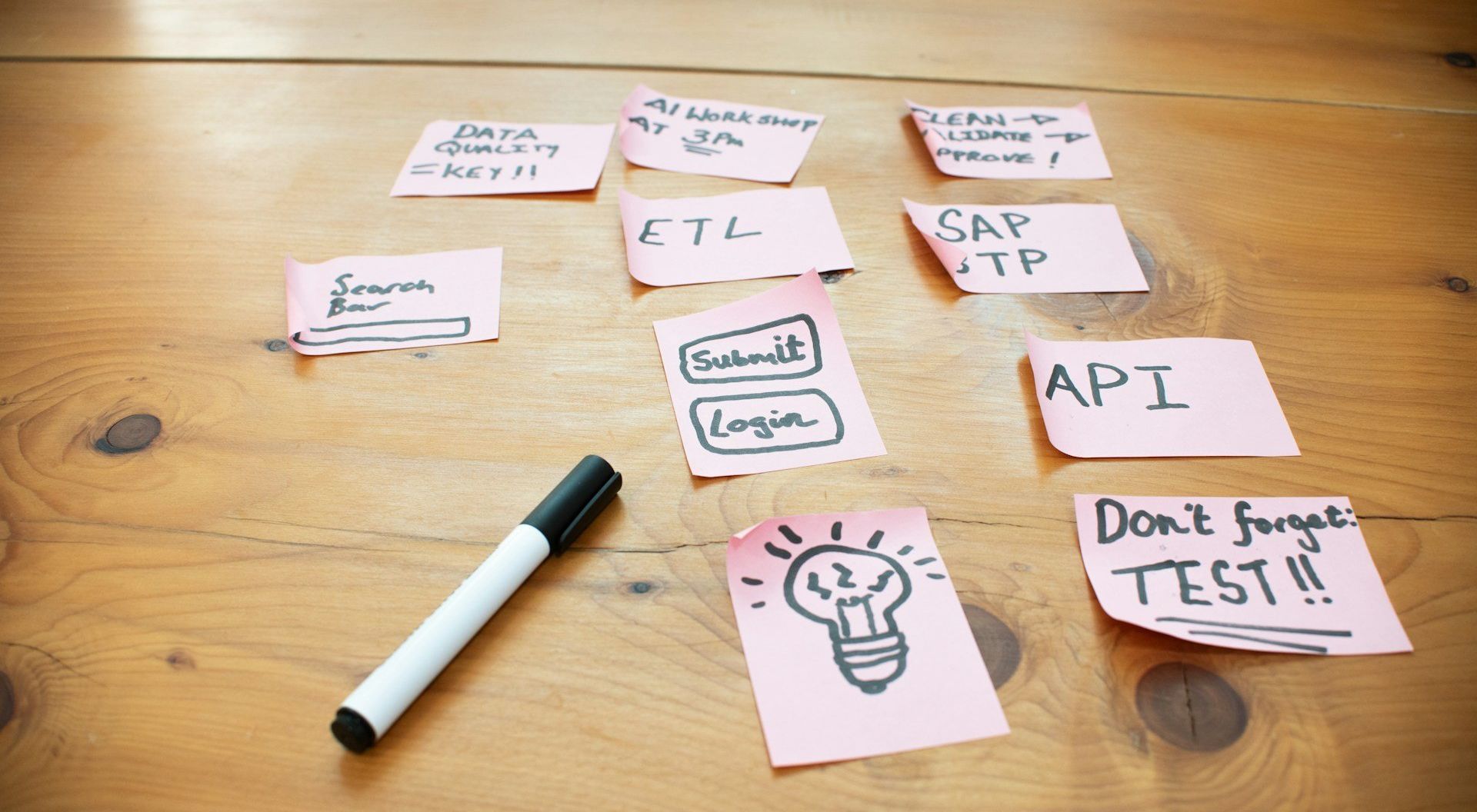
Before AI can do anything, somebody has to write the process down. Photo: Bluestonex / Unsplash.
What GUS says: the share of companies using AI doubled
According to Statistics Poland (as reported by PAP), 17.8% of surveyed companies used AI technologies in 2026, against 8.7% a year earlier.
Most common uses according to the GUS release:
- most often for marketing and sales: 11.1% of companies,
- for office work and management processes: 9.6% of companies,
- tools that generate images, audio or video: up from 2.9% to 9.9% of companies in a year,
- for comparison, 58.6% of companies already buy cloud computing services.
Note that fewer than one in five companies still use AI. Among the categories GUS reports, tools that generate images, audio and video are growing fastest. The rest are still deciding, so there is plenty of room for change.
How we compare with Europe
The latest EU-wide comparison is still for 2025. Eurostat reports that 20.0% of EU companies used AI then (13.5% a year earlier) and only 8.4% in Poland. Only Romania was lower (5.2%).
Size matters a lot. In a Eurostat study, 17% of small, 30.4% of medium and 55.0% of large EU companies used AI in 2025.
I don't compare the 17.8% from GUS (2026) directly with the 20.0% from Eurostat (2025), because the years differ and GUS and Eurostat count slightly differently. For 2025 the two series are close (8.7% and 8.4%), so the direction is clear: Poland is catching up.
Why the rest haven't started
Eurostat asked companies that had considered AI but don't use it for their reasons. In Eurostat's data, the most common were:
- lack of relevant expertise: 70.9%,
- unclear legal consequences: 52.5%,
- concerns about data protection and privacy: 48.8%.
That matches what I hear from clients. Rarely does anyone say "AI is too expensive". More often: "I don't know what exactly to do with it" and "I'm afraid to put customer data in there". Both problems have the same fix: start with one small, well-described process.
I wrote about the risks of AI-written code separately in AI-written code in your company.
Where to start in one afternoon
You don't need a 40-page AI strategy. This is how I start:
- Pick one repeatable process. For example: a form enquiry lands in a spreadsheet, someone retypes it into the CRM and replies to the customer. If someone in your company does that every day, it's a good candidate.
- Write it down step by step on paper. Who, what, from where, to where. Without this no automation will work, even with the best model.
- Separate what is rigid from what needs language. Moving data, invoices and notifications are done by regular automation (Make, API). I add AI only where something has to be understood or written, such as classifying an enquiry or drafting a reply.
- Keep a human at the end. AI prepares a draft, you approve it. Only after a few weeks without errors can some steps run unattended.
- Decide what data must never be sent. Customers' personal data, contracts, health data: check the tool's terms and data processing agreement before anything goes in.
- Measure the result. How many minutes the process took before, how many now, how many errors. Without a number, in a month nobody will remember whether it helped at all.
AI without a process is just another browser tab
Companies that get real value from AI have one thing in common: they know which process they want to speed up. The tool alone changes nothing if data is still retyped by hand from one window to another.
If you want to automate one specific process in your company, check out my integrations and automation offer. I bill by the hour or per project, and every automation comes with error handling and documentation.
All the best,
Sławek
If you retype data between tools by hand, see the integrations and automation offer .
Technology that works for your business
Ready to transform your business? Let's discuss your needs and find the best solution.