The CrowdStrike outage: one update, and a company that doesn’t boot
On 19 July 2024, at 04:09 UTC, CrowdStrike sent a configuration update for its Falcon software to Windows computers. At 05:27 it pulled the bad version. Anyone who downloaded the file in those seventy-eight minutes got a blue screen. The computer came up and fell straight back down. Macs and Linux machines skipped the file.
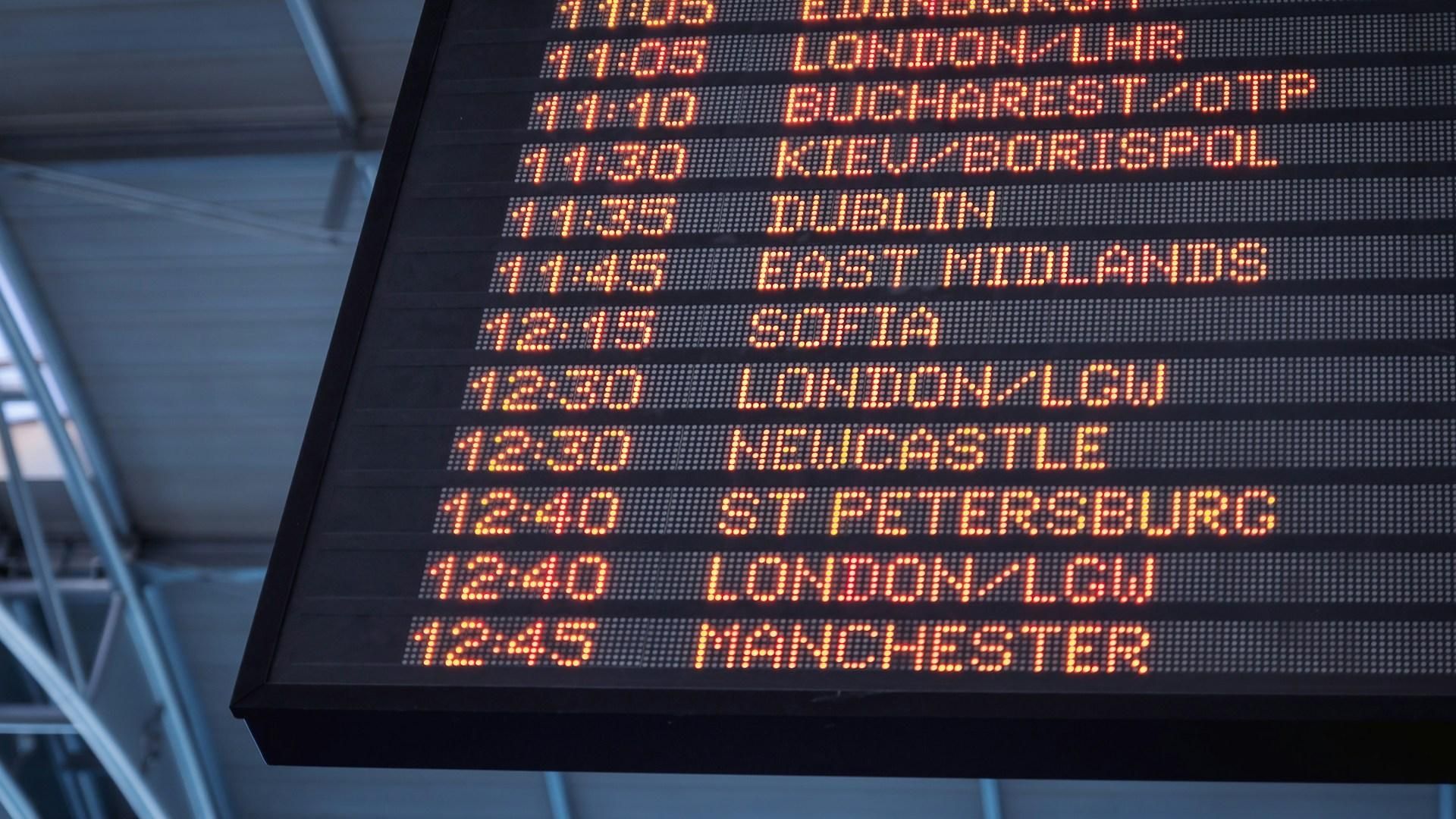
Seventy-eight minutes. Then the file was pulled. The computers that had already received it did not get up on their own. Photo: JESHOOTS.COM / Unsplash.
This was not a break-in. CrowdStrike said so in its preliminary report of 24 July. The configuration file had a bug. Nobody broke in.
At an airline you see it in thousands of cancelled flights. At a workshop, a clinic, or a shop with twenty desks you see something quieter. In the morning nobody can open the program the day runs on.
Two kinds of update, not one
CrowdStrike splits two things apart. That split is why so many companies went down at once.
The program itself, the sensor, customers can roll out in stages. The preliminary report of 24 July describes that path plainly. Automated tests first, then a trial inside CrowdStrike, then early customers, then everyone else. A company can stay on the current version or sit one or two versions back. Nobody walked that path on 19 July.
What went out was the faster channel, Rapid Response Content. That is not a new version of the program. It is a configuration file the sensor reads from disk. They call it a channel file. That morning it was file number 291. These files exist so protection can react to a new kind of attack without waiting for the next program version. They go out several times a day. Customers did not have the same control over them as over the sensor version.
The validator that was supposed to catch bad content had a bug of its own. Two batches of data went out that day. One passed the check even though it should not have. The sensor loaded the file, reached past the memory it had prepared, and the exception could no longer be swallowed. Windows crashed. The machines in scope ran sensor version 7.11 or newer and were online between 04:09 and 05:27. Anyone offline in that window did not get the file. Pulling it stopped further machines. It did not wake the ones already stuck in a restart loop.
8.5 million is less than one percent
On 20 July 2024 David Weston at Microsoft estimated, in a post on the company blog, the impact at 8.5 million Windows devices. He wrote that this was less than one percent of all machines running that system. The percentage is small. It hurts the companies that use those machines to move people, pay money, and run hospitals. Weston adds that the wide impact came from CrowdStrike being used by enterprises that run critical services.
Delta counted its own piece in an SEC filing submitted on 8 August 2024. About 7,000 cancelled flights over five days. Direct revenue hit: $380 million, mostly refunds and passenger compensation. Extra non-fuel cost: $170 million, crews and expense reimbursements. Fuel came out $50 million cheaper, because those flights did not happen. In the same filing, CEO Ed Bastian says the company is pursuing claims against CrowdStrike and Microsoft for damages of at least $500 million.
That is not your invoice. With twenty desks nobody writes a number like that into a report. They write down the day the warehouse could not ship, because the scanner was lying next to a blue screen, and the invoices stopped, because the accounting program lives on the same computer as everything else.
The fix could not be pushed over the network
The system never reached the desktop, so the fix could not be installed the way an ordinary update is. Someone had to walk up to the machine.
Microsoft described a recovery tool in article KB5042429. One of the paths needs a local administrator account. On a disk encrypted with BitLocker, the system can ask for a recovery key before anything can be touched. A key that sits with one person, or in a file on the laptop that will not boot, is not a key at that moment. It is a memory.
At a smaller company the same jam usually looks simpler, with no Falcon and no airline. One person knows the router password. The disk is encrypted, and the string of digits is in a drawer only that person has a key to. Or in a file on the disk that string was meant to open. On 19 July that arrangement showed up worldwide at once. In an office of twenty people, one Monday is enough.
What the vendor added afterwards
In the same report of 24 July, CrowdStrike says it will change the fast channel. Updates are to go out in waves, from a small test group, not to everyone at once. Customers are to get more control over when the file arrives and on which computers. There are to be notes about the contents, which you can subscribe to.
Before that, the control sat on the program version. On a file that goes out several times a day, it was not there. Trust in the validator stood in for a trial on a few machines. The validator had a bug. A few computers with a blue screen, before the file reaches the rest, is the wave they wrote down after the fact. You can ask for that order from accounting software, antivirus, and remote desktop too. You do not need Falcon for it.
This is not a reason to stop updating
It is easy to turn this story into “better not touch anything”. That would be the wrong lesson. An unpatched plugin on a company site is a separate and real problem. I covered it in WordPress updates: the holes are in plugins, not the core. CrowdStrike did not announce the end of updates. It promised a trial on a small group and tighter control of the thing that still has to go out quickly, because that is how protection against a new kind of attack works.
The same day, 19 July, CISA confirmed this was not an attack, and warned that criminals were already using the outage for phishing. On a day like that, a message in the style of “we’ll help, please click” is cheap to send, and easier to press, because the computers are down and someone is looking for a way out. Keep the number of the vendor you already pay, written down beforehand. Not in the footer of a letter from a stranger.
Four questions for a quiet Tuesday
You do not need Falcon to have the same setup. A program that updates itself on every desk is enough. The questions are for the person who looks after those computers. Or for you, if that person is you.
Which programs land on every computer in the same hour. The rest can stay a day behind, once two desks took the update in the morning and still work. If they cannot, that is an answer too. The risk is accepted, not accidental. Someone should say it out loud before a blue screen says it.
Where the disk-encryption keys are, and the local administrator password. Does more than one person know them. Is the copy outside the computers those keys open. A USB stick in a safe, or an account the co-owner can also open, does more than another subscription. A key in a file on the encrypted disk is a joke. On Monday morning nobody laughs.
What the company does for one day without those desks. An invoice on paper, a card terminal on a phone, an order list printed the evening before. If the only answer is “then we stop”, write at least that down. A plan that lives in the IT person’s head is, on the day of the outage, where the IT person is. Often on leave.
What the contract says about a day when a vendor update stops work. In its filing of 8 August 2024 Delta put the damage at $500 million or more and said it would pursue claims against CrowdStrike and Microsoft. It filed the lawsuit on 25 October 2024. In CrowdStrike’s report for the half-year ended 31 July 2026, the court on 16 May 2025 granted in part and denied in part the motion to dismiss. That same report says discovery is still going. The amounts Delta seeks in the complaint are described there as unspecified. Two years after the outage a large airline is still gathering evidence. A company that lives off one Monday will not put that lawsuit into tomorrow’s plan. First the clause in the contract about the liability cap. Then two machines that take the new version a day earlier.
Two machines first
One update from a vendor you pay for protection can stop a company faster than a missing update. The difference you can make on an ordinary Tuesday is small. Two computers take the new thing first. A second person also knows the disk key. There is a note about what you do when the rest of the desks do not boot.
If you do not know which programs land on every desk at once, or where the disk keys are, it can be written down without a review of all of IT. See my technical consultation. We take one set of tools you actually use, and I leave in writing what can wait a day and what still has to go out immediately.
All the best,
Sławek
If you need a website that builds trust and leads to a conversation, see the website offer .
Technology that works for your business
Ready to transform your business? Let's discuss your needs and find the best solution.


