Private Cloud (Nextcloud) vs Google Workspace and Microsoft 365: The Real Cost in 2026
When you start a company, paying a few euros a month per seat for Google Workspace or Microsoft 365 looks like pocket change. You click, attach a card, and move on. The problem starts two years later when you have ten people on board, two terabytes of client documents, extra Dropbox and Slack seats, and suddenly realise you are paying thousands of euros a year just to access your own files. Below I break down when renting someone else’s cloud stops making financial sense and what running Nextcloud on your own server looks like in practice.
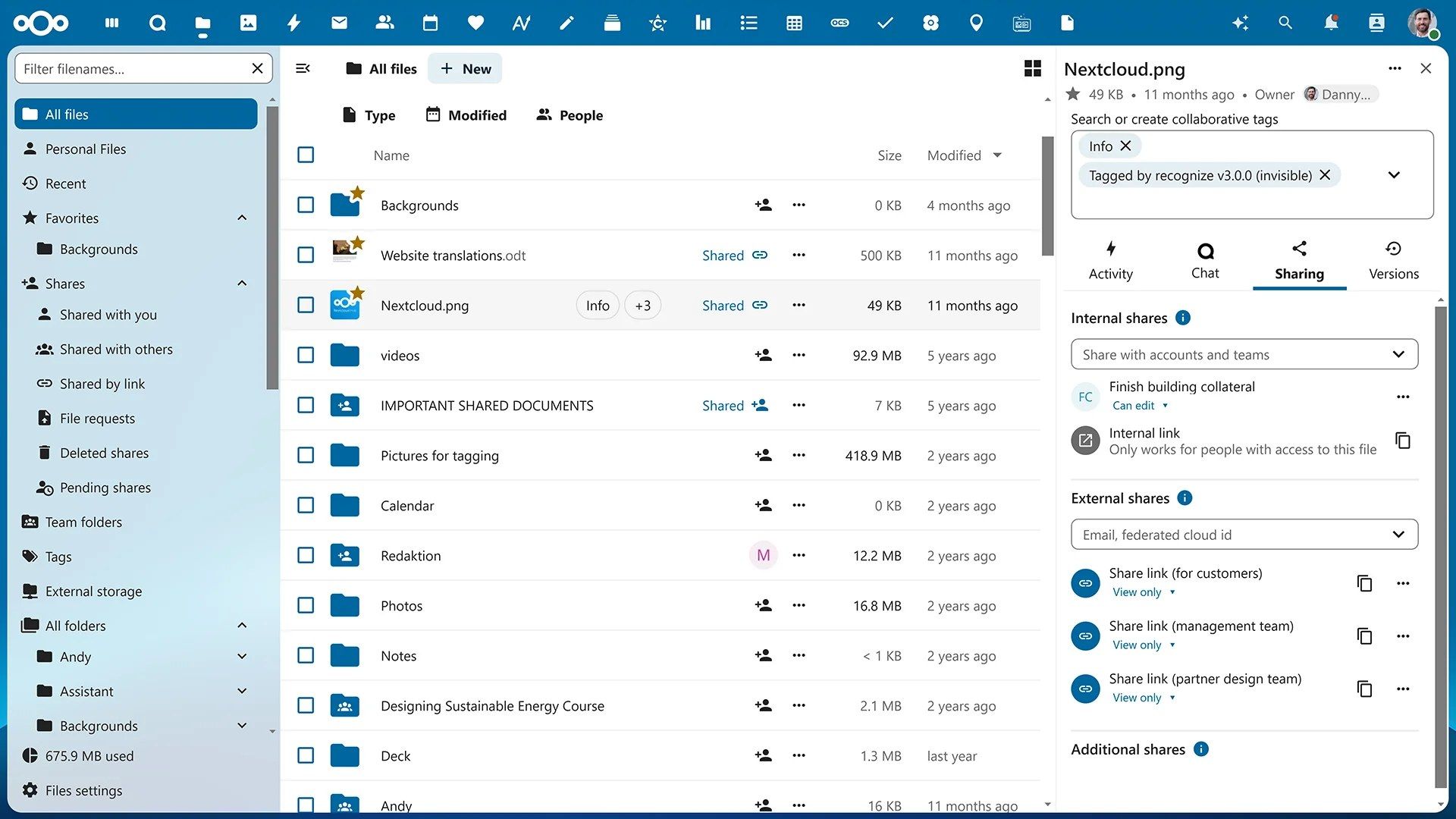
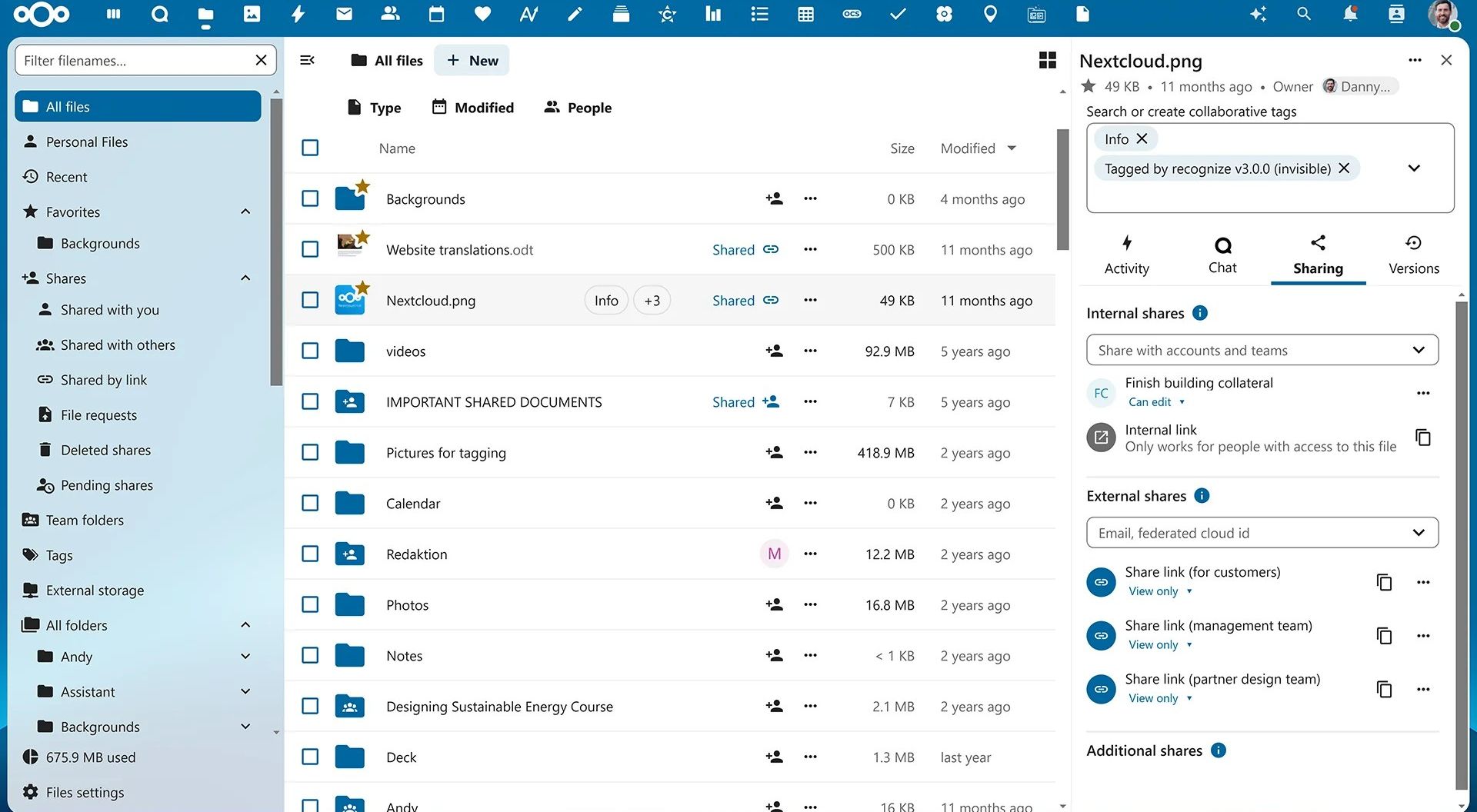
Nextcloud private cloud: files, calendar, video calls, and document editing in one place — without paying per additional user.
Why European businesses are moving back to their own servers
This is no longer a niche hobby for Linux enthusiasts. According to European Commission data (EUR-Lex), businesses and institutions in the European Union spend EUR 264 billion a year mostly on proprietary US software and IT services. American hyperscalers — AWS, Microsoft Azure, and Google Cloud — currently control around 70% of the European cloud market.
In 2026 that trend started reversing sharply. Gartner forecasts show that global spending on sovereign cloud infrastructure will reach $80 billion in 2026, while across Europe spending surged by 83% year-over-year. Business owners stopped asking whether cloud SaaS is convenient. They started asking who holds the keys to their client database and how much they will pay after the next price hike.
The 3-year math for a 10-person company
Let us run an honest calculation without marketing asterisks. Take a small service business, law firm, or agency — 10 people, shared drives, document editing, spreadsheets, and daily communication:
- Google Workspace Business Standard + add-ons: around 54–65 PLN net per user per month. With 10 people plus extra storage or side tools (such as Dropbox Plus at 12 EUR or Slack Pro at $8.75 per seat), the bill quickly climbs to 900–1,400 PLN per month. Over 3 years you hand over 32,000 to 50,000 PLN net — and the day you stop paying, you are left with nothing.
- Microsoft 365 Business Premium: around 98 PLN net per user per month. For a 10-person team that is nearly 1,000 PLN every month, or over 35,000 PLN net across 3 years just for office apps and OneDrive.
- Private Nextcloud on your own server: a one-off deployment with security hardening and automated backups (starting at 5,500 PLN net with me) plus a fast VPS in a European data centre (e.g. Hetzner or OVH) at roughly 80–150 PLN per month for the entire company. Over 3 years your total cost is around 8,500–11,000 PLN net. Most importantly: adding your 11th, 15th, or 25th employee costs exactly 0 PLN.
If you want to see how much is slipping through your fingers on recurring tools, plug your current stack into my subscription calculator — seeing the 3- and 5-year total wakes you up faster than morning coffee.
It is not just money: jurisdiction, account lockouts, and AI training
In Big Tech terms of service, your company is just a row in a database. If an automated safety filter flags one file on your drive as a policy violation or suspicious activity, your entire business account can be locked in minutes. Instead of serving clients, you end up appealing to a support chatbot.
The second issue is sensitive data and artificial intelligence. NDAs, quotes, medical records, and financial files sit on servers subject to the US CLOUD Act. In a world where cloud vendors race to train AI models and attach assistants to every document, a private server running Nextcloud with Collabora Online or OnlyOffice gives you something no SaaS tier can sell: physical certainty that your files belong exclusively to you.
When does a private cloud make sense — and when does it not?
I am not a zealot and I do not advise every solo founder to ditch Google on day one. For a private cloud to deliver peace of mind rather than another chore, I stick to three rules:
- For a solo freelancer, a free drive or an entry-level seat at 27 PLN is fine. The break-even point for your own cloud starts at 3–4 team members, or the moment you store terabytes of media and confidential client data.
- A company cloud must not sit on a home PC under a desk. It belongs on an isolated VPS or dedicated server in the EU, with a firewall, encryption, and daily automated backups shipped to external object storage (the 3-2-1 backup rule).
- The system must be maintenance-free for your team: mobile apps back up photos automatically, the drive mounts in Windows and macOS like a regular folder, and documents are edited in the browser just like in Google Docs.
Stop renting your digital office
SaaS subscriptions are designed to be effortless to enter and painful to leave. The longer you wait, the more data you eventually have to migrate and the harder it gets to retrain your team.
If you want to calculate whether switching to Nextcloud in your company pays for itself in six months or a year, get in touch. We will review your current cloud invoices, size the server, and plan the migration so that on Monday morning your team simply logs into their new workspace.
All the best,
Sławek
If you want files and tools on your own server, see the private Nextcloud offer .
Technology that works for your business
Ready to transform your business? Let's discuss your needs and find the best solution.