AI Overviews are taking your clicks. What to do with your business website in 2026
Your Google rankings look fine, impressions are growing, and clicks keep falling. If you see this in Search Console, it's not a data bug. It's AI Overviews — the summaries Google generates above the search results. Below are the hard numbers and what you can actually do about it.
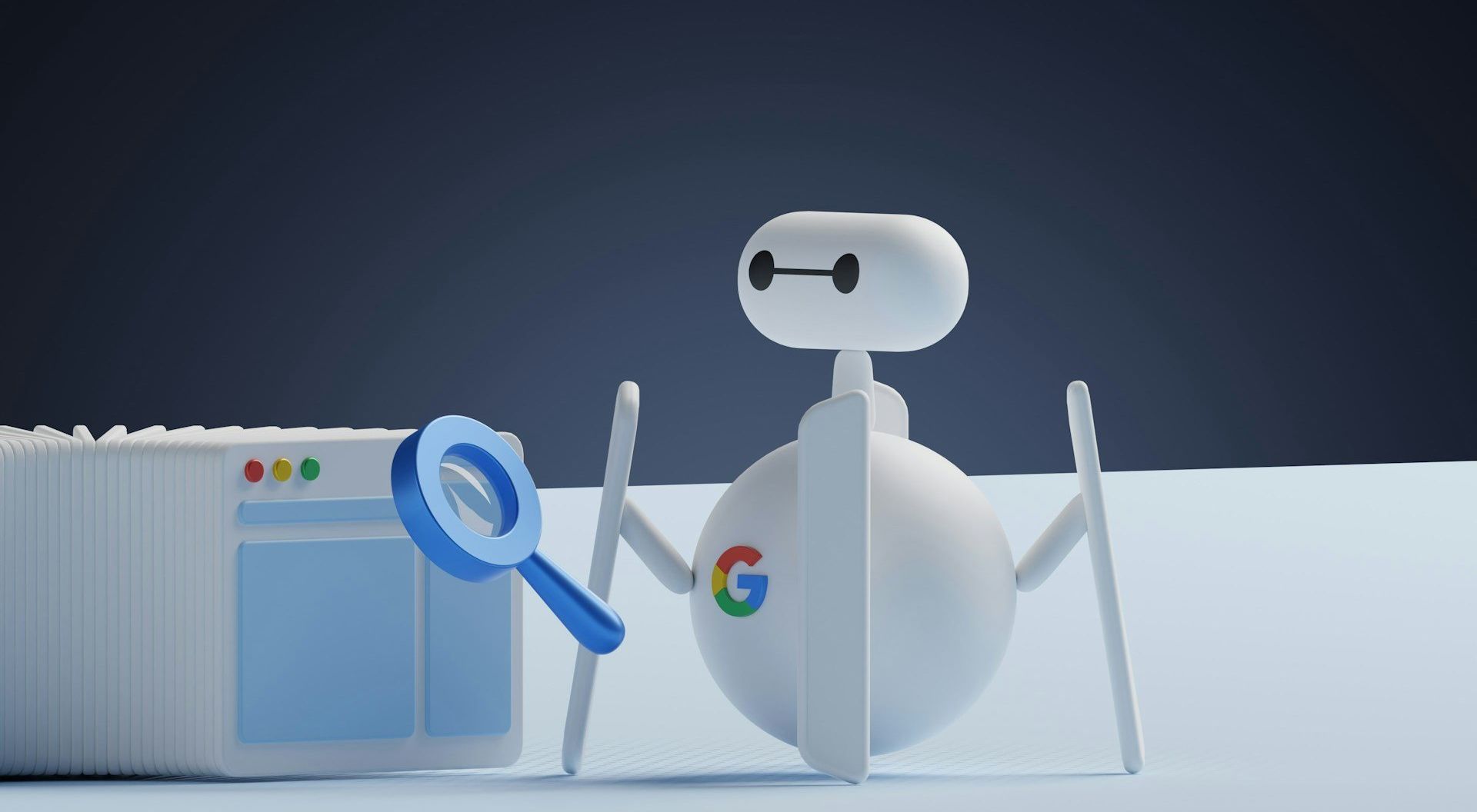
Google increasingly answers by itself instead of sending people to your website. Photo: Growtika / Unsplash.
How many clicks does an AI Overview take?
The most cited study is Ahrefs' analysis of 300,000 keywords. On December 2025 data, the presence of an AI Overview means a 58% lower CTR for the page in position 1. Position 2 loses about 51%, position 3 about 46%. A year earlier, the same measurement showed "only" 34.5%.
A user behavior study shows the same. Pew Research Center analyzed real searches by 900 adults: when an AI summary appeared, people clicked a traditional result in 8% of visits, versus 15% without one. A link inside the summary itself was clicked in 1% of cases.
What about Poland?
According to Senuto's report on 17.8 million Polish keywords, an AI Overview appears for 28.95% of keywords, but covers 14.87% of search volume. Why the gap? Because Google shows summaries mainly on the long tail and on informational queries like "what is", "how to", "why". Transactional and local queries are affected far less often.
I see it on my own site too. My post about Google Search Console gets impressions for "what is google search console" queries, and practically no clicks. A textbook case: the user gets the definition from Google and doesn't need to visit any website.
What is Google Search Console and what is it for?
What matters most: getting cited in the AI Overview
The most interesting data comes from Seer Interactive's study (53 brands, 5.47 million queries, 2.43 billion impressions). Average organic CTR for informational queries in 2025:
- no AI Overview: 3.35%,
- AI Overview, and your page is cited in it: 2.07%,
- AI Overview, and your page is not in it: 0.94%.
Uncited pages lost 67% of their CTR during 2025. In early 2026, CTR with AI Overviews bounced back slightly (from 1.3% to 2.4%), but it won't return to pre-AI levels. The takeaway: you're no longer fighting only for a position, but for Google to use your content in its answer.
What exactly should you do with your website?
There is no magic "GEO" that replaces SEO. There are things that genuinely increase your chance of being cited and protect your sales:
- Separate informational and sales content. Traffic from "what is" queries will keep falling anyway. The money is in purchase-intent and local queries, where AI Overviews rarely appear — invest in your offer pages there.
- Write so you can be quoted. A short, specific answer at the start of each section, your own data and numbers, clear question-style headings. AI can write generic content by itself.
- Take care of the technical side. Page speed, correct indexing, structured data (schema.org), clean HTML without content hidden in JavaScript. Google cites mostly top-10 pages, and you won't get into the top 10 with a slow, poorly indexed website.
- Measure differently. In Search Console, look at clicks and conversions from sales queries, not overall CTR. Falling CTR with growing impressions on informational queries is the norm now, not a failure.
Fewer clicks doesn't have to mean fewer customers
AI Overviews mostly take traffic from content that rarely sold anyway. The problem starts when your site is slow, poorly indexed or has nothing worth quoting — then you also lose the queries that bring in customer inquiries.
If you want to find out where your website is losing traffic and what to do about it, check out my technical SEO offer. We start with data from your Search Console, not guesswork.
All the best,
Sławek
If your site exists but Google cannot see it, see the technical SEO offer .
Technology that works for your business
Ready to transform your business? Let's discuss your needs and find the best solution.